

AI to Transform Global Trade Says WTO Report
By Reuters | 17 Sep, 2025
By improving logistical efficiency AI is expected to power a big surge in global trade.
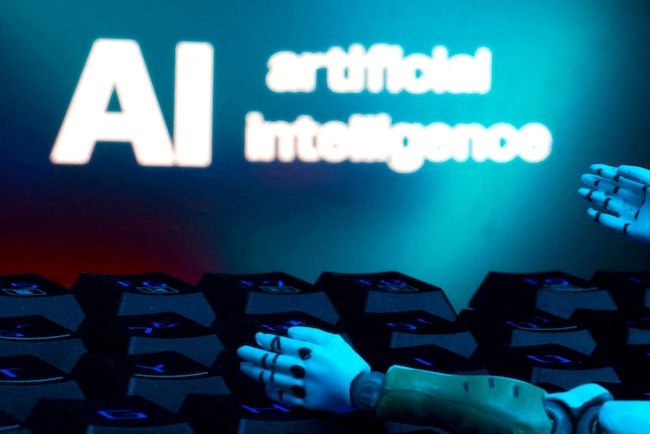
A message reading "AI artificial intelligence", a keyboard, and robot hands are seen in this illustration taken January 27, 2025. REUTERS/Dado Ruvic/Illustration/File Photo
Artificial intelligence could boost the value of trade in goods and services by nearly 40% by 2040, but without adequate policies it could also exacerbate economic divides, a new World Trade Organization report warned on Wednesday.
Lower trade costs and enhanced productivity could drive substantial increases in trade and GDP by 2040, with global trade projected to rise by 34-37% under various scenarios, according to the WTO's World Trade Report.
Global GDP could also increase by 12-13%, it said.
"AI could be a bright spot for trade in an increasingly complex trading environment," said the Deputy Director General of the WTO, Johanna Hill, commenting on the annual report that analyses trends in the multilateral trading system.
Acknowledging current turbulence in the world trading system, Hill noted that AI was reshaping the future of the global economy and international trade, with the potential to reduce trade costs and boost productivity.
Global trade rules, governed by the Geneva-based watchdog, have faced major disruption this year following a slew of tariffs by U.S. President Donald Trump's administration.
The report highlighted how businesses could reduce costs in logistics, regulatory compliance and communications.
"AI-driven translation technologies can make communication faster and more cost-effective, particularly benefiting small producers and retailers by enabling them to expand into global markets," the report said.
Such advancements could help increase export growth in low-income countries by as much as 11%, provided they improved their digital infrastructure.
However, the report cautioned that without targeted investment and inclusive policies, AI could deepen existing divides.
"The effects of the development and deployment of AI are raising concerns that many workers, and even entire economies, could be left behind," the report said.
WTO Director General Ngozi Okonjo-Iweala said policy makers needed to carefully manage the transition to AI.
"AI could upend labor markets, transforming some jobs whilst displacing others. Managing these shifts demands investment in domestic policies to enhance education, skills, retraining and social safety nets," she said during the launch event for the report in Geneva.
To ensure the benefits of AI were shared widely, predictable trade supported by WTO rules and lower tariffs on raw materials essential for AI technologies, including semiconductors, were crucial, the WTO added.
(Reporting by Olivia Le Poidevin. Editing by Alex Richardson and Mark Potter)
© 2025 by Asian Media Group Inc.
Recent Articles
- Getting Fit Pt. 2 - Raising Our Floor
- South Korea Survives World Cup Scare, Advances to Round of 32
- SpaceX Targets US Consumers with Starlink Mobile Service Push
- Former First Lady Kim Keon Hee Gets 7-Year Jail Term for Bribery
- Iran Reasserts Right to Control Hormuz Passage After Ship Hit Near Oman
- Trump's Cutoff of Clean Energy Tax Credit Drives Rush of New Projects Before Costs Soar
- US May Goods Trade Deficit Widened Sharply on Imports Surge
- VW Eyes 100,000 Job Cuts, Closure of Four Plants in Biggest Overhaul Yet
- Small Aircraft Crashes into Beijing's Tallest Building
- Both Japan and Sweden Advance with Draw