

Beijing Offers Incentives to Taiwan After Opposition Leader's Visit
By Reuters | 11 Apr, 2026
In the wake of a visit by KMT chairwoman Cheng Li-wun China unveiled 10 new incentive measures for Taiwan, including easing tourist visits, allowing in approved TV shows, and facilitating food sales.
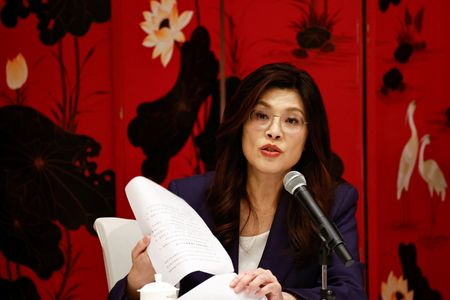
Cheng Li-wun, chairperson of the Kuomintang (KMT), Taiwan's largest opposition party, attends a press conference following her meeting with Chinese President Xi Jinping, in Beijing, China, April 10, 2026. REUTERS/Tingshu Wang
China on Sunday unveiled 10 new incentive measures for Taiwan, including easing tourist curbs, allowing in "healthy" television dramas and facilitating food sales, following a visit by the island's opposition leader.
The move comes at the end of a trip to China by Cheng Li-wun, chairwoman of the Kuomintang (KMT), Taiwan's largest opposition party. She met Chinese President Xi Jinping and talked about the need for peace and reconciliation.
The 10 measures, unveiled by the official Xinhua news agency, "explore" the establishment of a regular communication mechanism between the KMT and China's Communist Party, the full resumption of flights between the two sides and permission for individuals from Shanghai and Fujian province to visit Taiwan.
A mechanism will be established to ease inspection standards for food and fishery products, but that has to be on the political foundation of "opposing Taiwan independence," Xinhua said.
Taiwanese TV dramas, documentaries and animation will be allowed to be shown as long as they have "correct orientation, healthy content, and high production quality," it added.
There was no immediate reaction from Taiwan's government.
China refuses to talk to Taiwan President Lai Ching-te, saying he is a "separatist." He rejects Beijing's sovereignty claims over the democratically governed island.
China and Taiwan have blamed each other for the lack of a resumption of large-scale Chinese tourism to the island since the end of the COVID-19 pandemic.
Taiwan has also previously complained about Chinese restrictions on imports of certain agricultural and aquatic products, saying China has in some cases used unjustified excuses to stop the spread of pests and diseases.
(Reporting by Beijing newsroom; Additional reporting by Ben Blanchard in Taipei; Editing by Thomas Derpinghaus)
© 2026 by Asian Media Group Inc.
Recent Articles
- US Consumers Favor Homebuying over Renting for First Time Since 2023
- US Manufacturing Rises but Factory Employment Falls to Six-Year Low
- Meta Launches Cheaper AI Smart Glasses Starting at $299
- How the Philippines Went from an Asian Economic Leader to Laggard
- Pakistan May See Economic Dividend from Its Role As Peacekeeper
- KOSPI Plunges Nearly 10% After Regulator Warns on Leveraged ETFs
- Asian Refiners See Little Room for Iranian Oil, Leaving China as Key Buyer After US Waiver
- China Beats US with World's Fastest Non-AI Supercomputer
- Mamdani's Socialist Pull to Be Tested in Tuesday's Primaries
- Chinese Self-Driver Momenta to Launch Hong Kong IPO Next Week