

Brilliant Danhao Wang Died of National Security
By J. J. Ghosh | 08 Apr, 2026
A Chinese research student plummeted to his death at the University of Michigan last month following questioning by US national security agents.
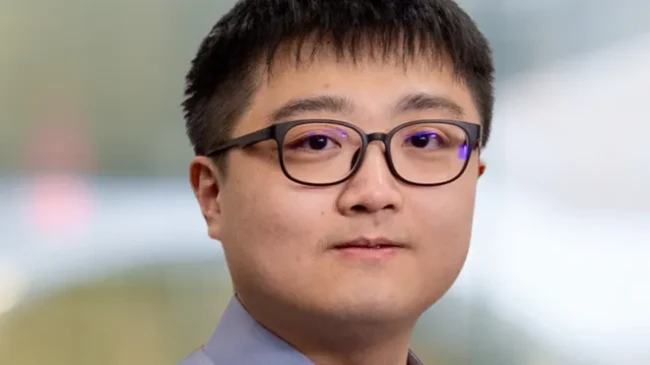
On the evening of March 19, 2026 officers from the University of Michigan Police Department responded to an emergency call from the George G. Brown Building. What they found was the body of a faculty research assistant who had fallen from an upper level.
Danhao Wang was pronounced dead. There was no question whatsoever about that.
Everything else surrounding his story remains up for debate.
Who Was Danhao Wang?

Wang, an expert in semi-conductors, was described as a "promising and brilliant young mind".
Danhao Wang was an electrical and computer engineering research assistant at the University of Michigan. He listed himself as a postdoctoral research fellow who had been at UM since August 2022. Before that Wang spent almost five years at the University of Science and Technology of China, getting a Ph.D. in electrical and electronics engineering.
He was not a minor figure in his field. Engineering Dean Karen Thole described him as a "promising and brilliant young mind, whose research into wide bandgap III-nitride semiconductor materials and devices published in Nature stands as a landmark, uncovering for the first time the switching and charge compensation mechanisms of emerging ferroelectric nitrides."
You don't have to understand what any of that means to recognize that he was a big deal.
Wang’s work has appeared in over 100 publications and as he described it, sat at the intersection of electrical engineering, material science, chemistry, and photonics. He was, in other words, exactly the kind of researcher that universities spend years recruiting and retaining.
His tragic death is being investigated by campus police as an act of self harm. And authorities in his home country seem to agree with that assessment. A spokesman for China's embassy in Washington confirmed to the South China Morning Post that Wang had taken his own life.
Oftentimes, it’s tough to understand why someone would take their life. But in this case, China thinks they have an idea.
What China Says Happened
Chinese state media alleged that Wang was investigated and questioned by law enforcement one day before his death.
The Chinese Consulate in Chicago said on X that the US had "overstretched the concept of national security for political manipulation and groundlessly interrogated and harassed Chinese students and scholars," adding that these actions "poison the atmosphere of people-to-people and cultural exchanges between China and the US, and create a serious chilling effect."
A Chinese Ministry of Foreign Affairs spokesperson called Wang's death "heartbreaking" and said it happened "after being subjected to hostile questioning by US law enforcement personnel," adding that it "calls into question once again the impact and legitimacy of unwarranted U.S. interrogation and harassment targeting Chinese researchers and students."
China has demanded a full investigation and called on the US to stop what it describes as discriminatory enforcement targeting Chinese scholars.
What the US Says
The US has said very little.
Neither the Departments of Justice nor Education have responded to requests for comment. The FBI sent a statement noting its longstanding policy of neither confirming nor denying the existence of any investigation or investigative activity involving specific individuals.
The university, for its part, has confirmed Wang's death, expressed condolences, and noted the investigation is ongoing. It has warned against misinformation generated by artificial intelligence.
The Union's Warning
But while federal authorities seem to have little to say on the matter, Wang’s own union is sounding the alarm
In a statement, the union — UM-PRO, the University of Michigan Postdoctoral Researchers Organization — said: "Unfortunately, many of these same scholars fear being the victim of politicized attacks on foreign scientists amid the current landscape of volatile policies targeting both academics and immigrants. Thus, we find it important that the researchers in our unit understand their rights. As a union, UM-PRO is charged with protecting its membership."
Let's be precise about what that statement does and doesn’t mean.
It doesn’t mean that Wang's colleagues know something incriminating and are hiding it, nor does it mean the union believes federal investigators are acting in bad faith. It does not mean anyone is obstructing an investigation.
It is simply a factual statement about the rights of union members. In less charged circumstances, a statement like this would barely register.
But these are not less charged circumstances. And the statement does mean something, even if only by implication.
A union telling its members to stay silent when federal investigators come asking questions is not a small thing. It is a legible measure of how much fear has accumulated .
The Broader Context
Wang's death did not happen in a vacuum.
The University of Michigan has come under fire from the Trump administration numerous times. Allegedly, at least three Chinese nationals with ties to the university were charged by the FBI with attempting to smuggle biological material into the U.S.
Five Chinese UM students were also charged in October 2024 with crimes including conspiracy and lying to federal investigators after they were found on Camp Grayling, a military facility in northern Michigan, during a U.S. National Guard training exercise. Despite being found with cameras near military vehicles and classified communications equipment, the students left the country after graduating before they could be prosecuted.
Days after Wang's death, UM interim President Domenico Grasso appeared before the U.S. House Committee on Education and Workforce to address concerns of Chinese espionage occurring within American higher education institutions. Grasso said the university continues to improve background checks for foreign students and researchers, and has strengthened policies around sensitive material.
The timing was not a good look: A Chinese researcher dies by suicide the week before the university president testifies to Congress about Chinese espionage on campus.
Whatever the facts of Wang's individual case turn out to be, that sequence of events has understandably rattled a community that was already on edge.
What We Don't Know
Beyond knowing that a highly respected 30-something semiconductor researcher fell from a building on a March evening and did not survive, we know very little about the facts at play in this case.
And here is the uncomfortable truth: there is no version of this story that ends well.
If Wang was questioned aggressively by federal agents for no legitimate reason — if he was targeted simply because he was a Chinese researcher working in a sensitive field, in a climate where that alone is enough to make you a suspect — then the United States government may have contributed to the death of an innocent man. That is a grave thing.
If Wang was in fact engaged in wrongdoing — if the federal questioning was warranted and connected to genuine concerns about espionage or misappropriation of research — then that too is a tragedy. Whatever someone may have done, no interrogation should end this way. And his death forecloses any possibility of accountability, answers, or justice in either direction.
And if Wang's death had nothing to do with any of this — if it was the result of private struggles entirely unrelated to federal scrutiny, and the timing was simply devastating coincidence — then a brilliant young scientist is still gone. And every Chinese researcher on every American campus campus is now living with heightened fear based on a connection that may not even be real as a result of the Chinese government stirring the pot.
Pick whichever scenario you find most plausible. All of them say something troubling about where we are.
And none of them are good.
© 2026 by Asian Media Group Inc.
Recent Articles
- Unitree Prices IPO at $9 Billion Valuation
- AMD Buys Taalas to Expand Bet on AI Inference Chips
- N. Korean Forces Joining Russia's War Against Ukraine in Large Numbers
- S. Korea Province Deploys Drones to Warn Elderly Farmers Amid Heatwave
- Nintendo Operating Profit Jumps 151% on Robust Software Demand, Tariff Refund
- New Left-Wing Media Power Surge of Progressive Candidates
- MAGA Republicans, Democrats Jointly Blame Trump's Tech Ties for AI Inaction
- OpenAI, Anthropic AI Agents Implicated in New Security Breaches
- Iran Threatens to Hit Gulf States If US Launches New Strikes
- Ralph Lauren's Beat Powered by Young Shoppers in Asia, North America
Other Asian Media Group Sites
- AsiaMs.net — Asian American Women's Resource
- AsianSports.net — Asian American Sports and Fitness
- VoxCali.com — Videos and Podcasts for Asian Americans
- MyGoldScene.com — Guide to Asian Entertainment
- AttheBanquet.com — Asian Fine Dining and Hospitality
- EastwardDrive.com — Asian Carbuying Intelligence
- EastTable.com — Modern Asian Food and Culture
- TadkaTable.com — Inside South Asian Cooking
- GoGenerational.com — Diaspora Families Building Wealth