

Heavy Social Media Use Found to Erode Well-Being of Young Adults
By Reuters | 18 Mar, 2026
An Oxford study based on a Gallup poll found that young people who spent over five hours a day on social media report a markedly lower degree of happiness than others.
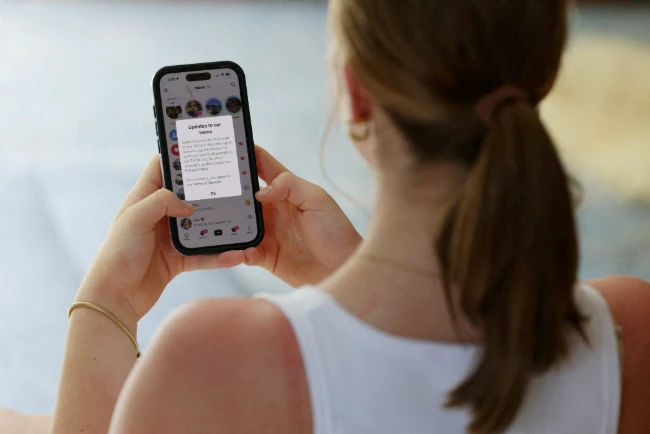
A teenager poses holding a mobile phone displaying a message from TikTok as law banning social media for users under 16 in Australia takes effect, in Sydney, Australia, December 10, 2025. REUTERS/Hollie Adams/File Photo
Heavy social media usage appears to contribute to a drop in wellbeing among young people, especially girls, in some English-speaking countries, the World Happiness Report published on Thursday found.
Already, a number of countries across the world are working on plans to curb children's social media access after Australia in December became the world's first country to ban social media for children under 16.
The latest research published in the annual World Happiness Report is based on data from U.S. market research company Gallup and other studies, analysed by a global team led by the University of Oxford in England.
REAL SOCIAL CONNECTIONS MATTER
The report did not establish a direct link.
However, researchers for this year's version of the report, combined the Gallup data with that from the OECD's Programme for International Student Assessment and other studies, leading them to conclude heavy social media use appeared to reduce happiness.
"The message coming through loud and clear is that we should try to put the social back into social media," Professor of Economics at the University of Oxford Jan-Emmanuel de Neve, one of the editors of the World Happiness Report, told Reuters.
De Neve added that algorithmically-pushed, passively-consumed and mostly influencer-type content had a more negative impact on users than a platform that connects people socially.
With the caveat that the impact of social media on wellbeing was complex, he said the combined data showed that 15-year-old girls, who used social media platforms for more than five hours a day, reported lower life satisfaction compared to girls of their age who use social media less.
Gallup's world-wide poll data showed life evaluations, or how people assess their life satisfaction, among under 25-year-olds in the United States, Canada, Australia and New Zealand have dropped "dramatically", by almost one point on a 0-10 scale, over the last decade.
By contrast, it found the self-reported life satisfaction of the young in the rest of the world increased on average over the same period.
Gallup's managing editor Julie Ray said the difference in life satisfaction between the young in the English-speaking countries and the rest of the world was likely related to broader social conditions.
"Social support is one of the strongest predictors of wellbeing, and previous research shows that in some countries younger people report feeling less supported, which may help explain the pattern," she told Reuters by email.
(Reporting by Anne Kauranen in Helsinki and Ilze Filks in Stockholm; editing by Barbara Lewis)
© 2026 by Asian Media Group Inc.
Recent Articles
- US Consumers Favor Homebuying over Renting for First Time Since 2023
- US Manufacturing Rises but Factory Employment Falls to Six-Year Low
- Meta Launches Cheaper AI Smart Glasses Starting at $299
- How the Philippines Went from an Asian Economic Leader to Laggard
- Pakistan May See Economic Dividend from Its Role As Peacekeeper
- KOSPI Plunges Nearly 10% After Regulator Warns on Leveraged ETFs
- Asian Refiners See Little Room for Iranian Oil, Leaving China as Key Buyer After US Waiver
- China Beats US with World's Fastest Non-AI Supercomputer
- Mamdani's Socialist Pull to Be Tested in Tuesday's Primaries
- Chinese Self-Driver Momenta to Launch Hong Kong IPO Next Week