

Huawei Seeks Global Markets for Its AI Chips As Alternative to Nvidia's
By Reuters | 10 Jul, 2025
Chinese AI chipmaker Huawei Technologies seeks to export AI chips to the Middle East and Southeast Asia as a first step in its bid to compete globally against Nvidia.
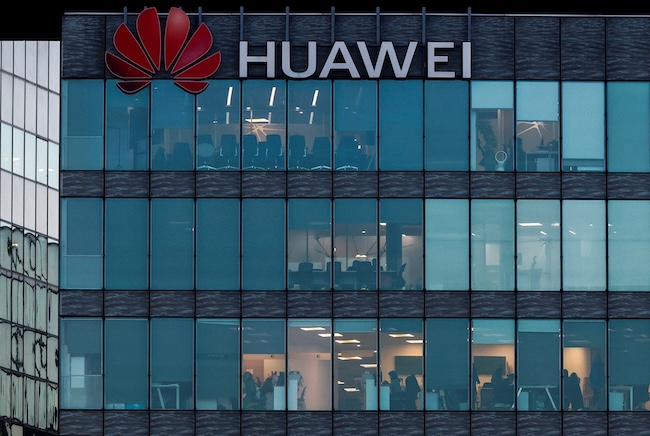
A view shows a Huawei logo at Huawei Technologies France headquarters in Boulogne-Billancourt near Paris, France, January 9, 2025. REUTERS/Gonzalo Fuentes/File Photo
Huawei Technologies is attempting to export small amounts of AI chips to the Middle East and Southeast Asia, as it looks to establish itself in markets dominated by U.S. chip designer Nvidia, Bloomberg News reported on Thursday.
The Chinese telecom giant has reached out to potential customers in the United Arab Emirates, Saudi Arabia and Thailand about purchasing its older-generation Ascend 910B AI chips, the report said, citing people familiar with the matter.
China's strongest competitor to leading U.S. chipmakers is offering the chips in the low thousands, though the exact number remains unclear, according to the report.
No deals have been finalised yet, the report said, adding that parties in the UAE have not shown interest, while the status of talks in Thailand is unclear.
Representatives for the government of Thailand did not immediately respond to Reuters request for comment. Huawei did not immediately respond to Reuters requests for comment.
The company is also trying to attract customers with remote access to CloudMatrix 384, a China-based AI system built with more advanced Huawei chips, which it is not currently ready to export due to limited supplies, the report said.
The Middle East has emerged as a booming market for AI chips, with several U.S. technology firms such as Nvidia announcing deals.
President Donald Trump had secured $600 billion in commitments from Saudi Arabia for U.S. companies during a tour of the region in May.
Huawei is also focused on selling 910Cs, its advanced AI chip product, to Chinese firms that cannot access best-in-class American chips, the report said.
Successive U.S. administrations have sought to restrict China's access to advanced American chip technology, citing concerns that it could be used to strengthen Beijing's military.
"With the current export controls, we are effectively out of the China datacenter market, which is now served only by competitors such as Huawei," an Nvidia spokesperson said.
(Reporting by Arsheeya Bajwa in Bengaluru; Editing by Arun Koyyur)
© 2025 by Asian Media Group Inc.
The company is also trying to attract customers with remote access to CloudMatrix 384, a China-based AI system built with more advanced Huawei chips, which it is not currently ready to export due to limited supplies, the report said.
Recent Articles
- Google Limits Meta’s Use of Its Gemini AI Models
- Key Volkswagen Shareholder Pitches Producing China Models in Germany
- S. Korea's Early World Cup Exit Triggers 'Utterly Baffled' Tirade by President
- Anthropic Allowed to Release Mythos AI Model to 'Tusted' US Organizations
- Apple Seeks Approval to Buy from Blacklisted Chinese Company to Ease Memory Crunch
- China's Industrial Profits Stay Resilient on Factories, Exports
- Meet the Teen Who Undertook a 7-Continent Solo Flight Against Cancer
- Getting Fit Pt. 2 - Raising Our Floor
- South Korea Survives World Cup Scare, Advances to Round of 32
- Why Asian-White Marriages Suffer Multiples the Disruption Rates of Asian-Asian Marriages