

Third of All Americans May Be Diabetic by 2050
By wchung | 06 Aug, 2026
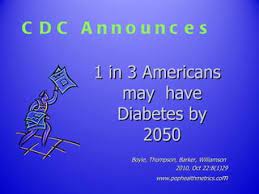
As many as 1 in 3 U.S. adults could have diabetes by the year 2050, federal officials announced Friday, in a dramatic revision of earlier projections.
The Centers for Disease Control and Prevention estimate that 1 in 10 have diabetes now, but the number could grow to 1 in 5 or even 1 in 3 by mid-century if current trends continue.
“This is alarming,” said Ann Albright, director of the CDC’s Division of Diabetes Translation.
The agency’s projections have been a work in progress. The last revision put the number at 39 million in 2050. The new estimate takes it to the range of 76 million to 100 million.
An estimated 24 million Americans have diabetes currently.
The new CDC calculation accounts for people who have diabetes but are undiagnosed — a group that wasn’t figured into earlier estimates, explained Edward W. Gregg, chief of the CDC branch that handles diabetes epidemiology and statistics.
Also, the researchers used new population growth estimates for the elderly and minorities, who have higher rates of Type 2 diabetes, he said.
One more factor: Diabetics are living longer, thanks to improvements in medical care, he added.
“Not all of the increase in prevalence is a bad thing,” said Dr. Sue Kirkman, the American Diabetes Association’s senior vice president of medical affairs and community information.
Diabetes is a disease in which the body has trouble processing sugar. It was the nation’s seventh leading cause of death in 2007.
In the classic form of diabetes, traditionally diagnosed in children or young adults, the body does not produce enough of a hormone called insulin to help sugar get into cells. That’s Type 1 diabetes.
Another form of diabetes, Type 2, now accounts for about 95 percent of cases. In that kind, the body’s cells resist insulin’s attempts to transport sugar. Type 2 is most common in people who are overweight and obese, in people 60 and older, and in African-Americans and other minority groups.
The growth in U.S. diabetes cases has been closely tied to escalating obesity rates. Recent CDC data suggests obesity rates may have recently leveled off. But the new estimates should hold up even if obesity rates remain static, CDC officials said.
The CDC is the main source for national disease statistics, and the agency seems to have done a thoughtful job in putting together these latest projections, Kirkman said. Still, she acknowledged being a little startled by the size of the new numbers.
“The magnitude is a bit surprising. But the trend is not” she said.
The new estimates were published online Friday by the journal Population Health Metrics.
MIKE STOBBE, AP Medical Writer ATLANTA
© 2026 by Asian Media Group Inc.
Recent Articles
- Unitree Prices IPO at $9 Billion Valuation
- AMD Buys Taalas to Expand Bet on AI Inference Chips
- N. Korean Forces Joining Russia's War Against Ukraine in Large Numbers
- S. Korea Province Deploys Drones to Warn Elderly Farmers Amid Heatwave
- Nintendo Operating Profit Jumps 151% on Robust Software Demand, Tariff Refund
- New Left-Wing Media Power Surge of Progressive Candidates
- MAGA Republicans, Democrats Jointly Blame Trump's Tech Ties for AI Inaction
- OpenAI, Anthropic AI Agents Implicated in New Security Breaches
- Iran Threatens to Hit Gulf States If US Launches New Strikes
- Ralph Lauren's Beat Powered by Young Shoppers in Asia, North America
Other Asian Media Group Sites
- AsiaMs.net — Asian American Women's Resource
- AsianSports.net — Asian American Sports and Fitness
- VoxCali.com — Videos and Podcasts for Asian Americans
- MyGoldScene.com — Guide to Asian Entertainment
- AttheBanquet.com — Asian Fine Dining and Hospitality
- EastwardDrive.com — Asian Carbuying Intelligence
- EastTable.com — Modern Asian Food and Culture
- TadkaTable.com — Inside South Asian Cooking
- GoGenerational.com — Diaspora Families Building Wealth