

Vietnam Tariff Talks Hung up on Reliance on Chinese Components
By Reuters | 15 Jun, 2025
Vietnam resists agreeing to US demands to cut its heavy reliance on components made in China.
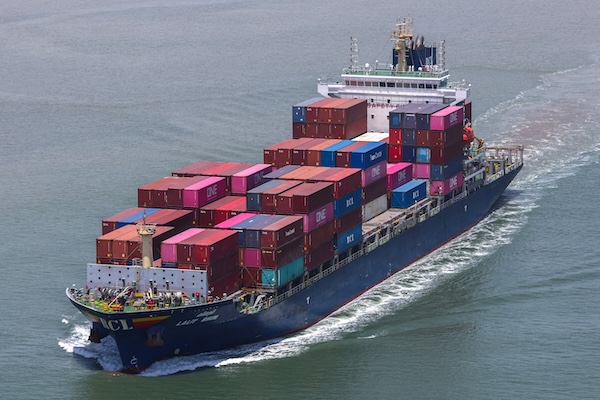
A container ship is seen near the Hai Phong International Container Terminal, after U.S. President Donald Trump announced a 90-day pause on tariffs for many countries, in Hai Phong, Vietnam, April 16, 2025. REUTERS/Athit Perawongmetha/File Photo
Vietnam and the United States made progress during a third round of trade negotiations last week, but critical issues remain unresolved, requiring further analysis and continued dialogue, Vietnam's trade ministry said on Sunday.
The talks, in Washington, D.C. from June 9-12, were held as a pause on 46% "reciprocal" tariffs on Vietnamese exports approaches expiration in early July, adding pressure on both sides to reach a compromise.
Vietnam's trade surplus with the United States surged to $12.2 billion in May, up nearly 42% year-on-year and 17% higher than April, Vietnamese government data showed. Exports to the U.S. climbed 42% from a year earlier to $13.8 billion, hitting a post-pandemic high.
U.S. negotiators have submitted a list of trade demands to Hanoi, which Vietnamese officials described as "tough," including measures aimed at reducing Vietnam's reliance on Chinese imports of industrial materials and components.
Vietnam's trade ministry said on Sunday the delegations had narrowed gaps on issues outlined in Vietnam's response to the U.S. requests and worked toward mutually acceptable solutions.
Both sides agreed to hold an online meeting in the coming days between Vietnam's trade minister Nguyen Hong Dien and U.S. Secretary of Commerce Howard Lutnick to address unresolved issues, the ministry added.
The last round of talks was held between Dien, Lutnick and U.S. Trade Representative Jamieson Greer, a format proposed by the United States.
Under pressure from Washington, Hanoi has recently cracked down on illegal transshipment - typically when cargo is moved between ships during transit - of goods primarily from China.
It has also expressed willingness to lower non-tariff barriers and increase imports of U.S. goods such as planes, farm products, and energy, though no purchase agreements have been announced.
(Reporting by Phuong Nguyen; editing by Sophie Walker)
© 2025 by Asian Media Group Inc.
Under pressure from Washington, Hanoi has recently cracked down on illegal transshipment - typically when cargo is moved between ships during transit - of goods primarily from China.
Recent Articles
- Google Limits Meta’s Use of Its Gemini AI Models
- Key Volkswagen Shareholder Pitches Producing China Models in Germany
- S. Korea's Early World Cup Exit Triggers 'Utterly Baffled' Tirade by President
- Anthropic Allowed to Release Mythos AI Model to 'Tusted' US Organizations
- Apple Seeks Approval to Buy from Blacklisted Chinese Company to Ease Memory Crunch
- China's Industrial Profits Stay Resilient on Factories, Exports
- Meet the Teen Who Undertook a 7-Continent Solo Flight Against Cancer
- Getting Fit Pt. 2 - Raising Our Floor
- South Korea Survives World Cup Scare, Advances to Round of 32
- Why Asian-White Marriages Suffer Multiples the Disruption Rates of Asian-Asian Marriages