

China's Battery Giants Are Ramping Up Sodium-Ion Batteries But Not for EVs
By JL Zhang | 11 Aug, 2026
The key advantages sodium-ion batteries have over lithium-ion don't include the one that matters most for EVs.
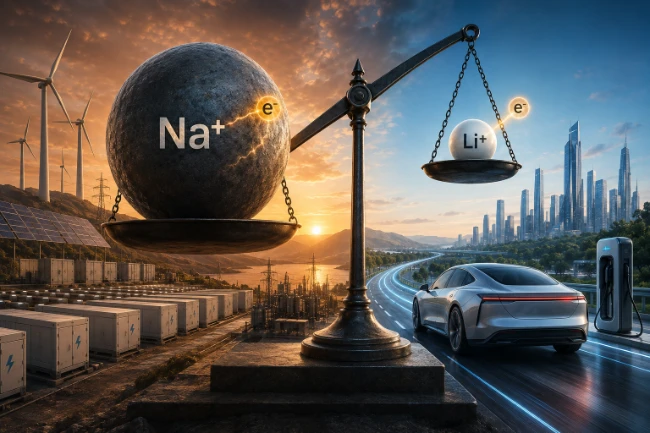
For a technology that spent five decades as a laboratory curiosity, sodium-ion batteries are suddenly everywhere in China's industrial planning. For EV intenders this raises the question: will this change my options in the near future. Let's start with a clear picture of who's doing what with the sodium-ion battery.
Model of CATL headquarters. (CATL Image)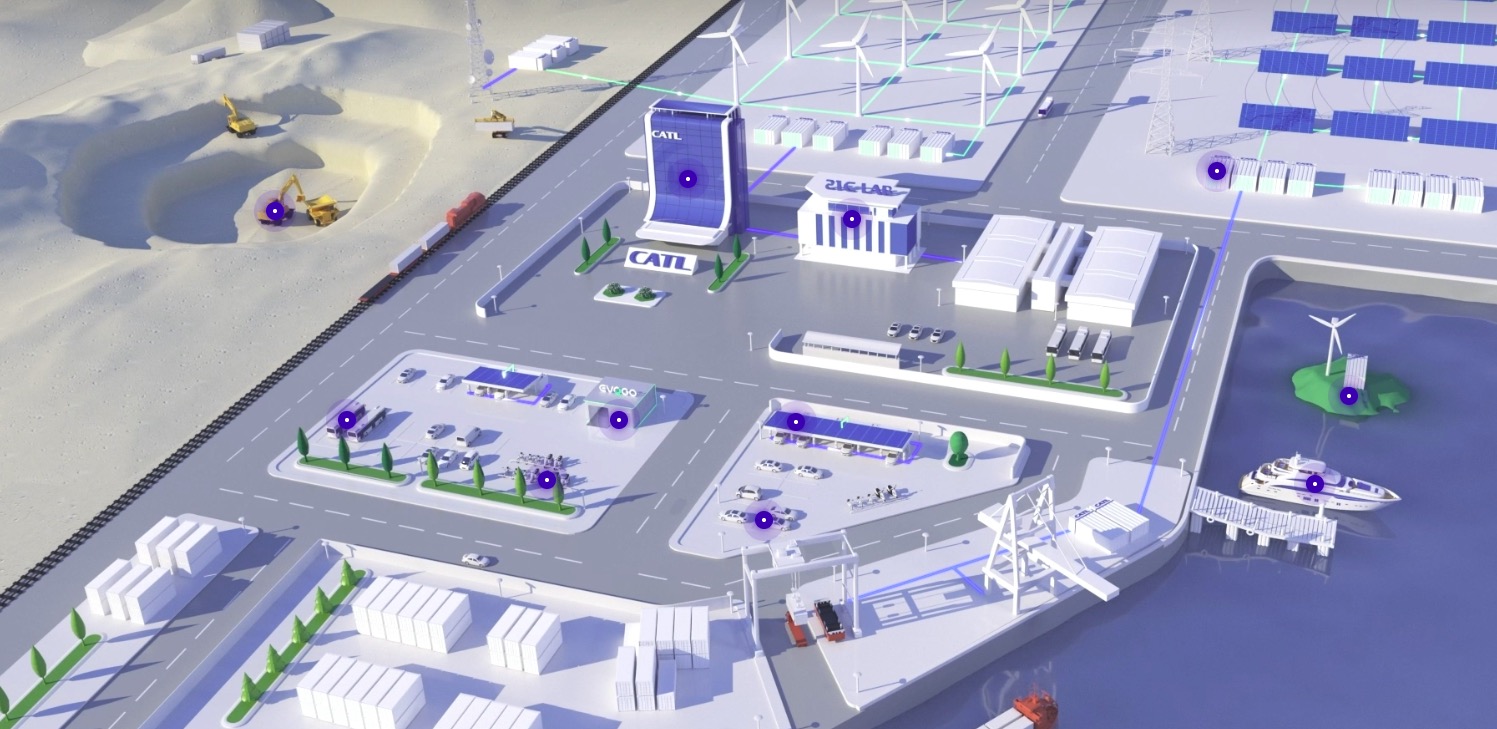
CATL, the world's largest battery maker, has declared 2026 the year its Naxtra sodium-ion line reaches large-scale deployment across battery swapping, passenger cars, commercial trucks, and grid storage. BYD, its closest rival, broke ground on a 30 GWh sodium-ion plant in Xuzhou and is now pushing a third-generation sodium chemistry toward a manufacturing cost of roughly four cents per watt-hour by 2027. HiNa Battery, the Chinese Academy of Sciences spinoff that was first to gigawatt-hour-scale production, is anchoring the world's largest sodium-ion project in Shanxi province.
A CATL Sodium-Ion battery pack. (CATL Image)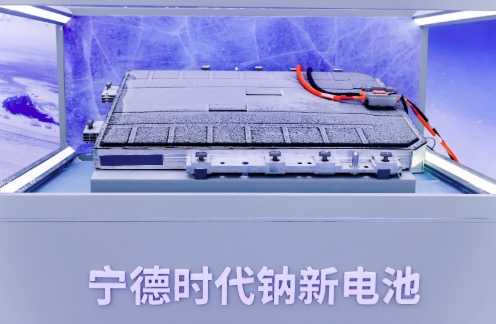
Analysts expect global sodium-ion manufacturing capacity to swell from under 5 GWh in 2025 to around 100 GWh by 2027, with China responsible for three-quarters or more of it. Benchmark Mineral Intelligence projects output climbing toward 400 GWh by 2030. Those are serious numbers, the kind that once heralded lithium iron phosphate's conquest of the electric vehicle market.
Which is why it is worth being clear about what this ramp-up is not. It is not the beginning of the end for lithium in electric cars. Sodium-ion chemistry brings genuine, durable advantages: it is cheaper, safer, made from some of the most abundant elements on Earth, and astonishingly good in the cold. What it does not bring is energy density. And energy density, more than any other single specification, is what determines whether a battery belongs in a mainstream electric vehicle.
The Ramp-Up Is Real
The scale of the current buildout distinguishes it from earlier false dawns. CATL unveiled its first-generation sodium-ion cell back in 2021, but commercialization stalled when lithium prices collapsed from their 2022 peak and erased sodium's cost advantage. The calculus flipped again over the past year. Lithium carbonate prices entering 2026 were more than double their level a year earlier, driven by surging demand from the energy storage sector, thin Chinese inventories, and supply disruptions including the suspension of CATL's own Jianxiawo lithium mine. With lithium expensive again, sodium cells regained their structural edge: raw materials that are cheap, plentiful, and geographically unconstrained.
CATL says it spent a decade and roughly 10 billion yuan developing Naxtra, solving unglamorous engineering problems along the way, from moisture control in manufacturing to gas generation in hard carbon anodes and adhesion on aluminum foil current collectors. The company describes the result as a transition from laboratory breakthrough to GWh-level industrialization. In April 2026 it signed its first major supply agreement, a three-year deal to deliver 60 GWh of sodium-ion batteries to Beijing HyperStrong for energy storage projects. BYD, meanwhile, is pouring capital into a polyanion sodium chemistry, known as NFPP, engineered specifically for stationary storage, with a dedicated 189 amp-hour heavy-duty cell and a target of more than 10,000 charge cycles.
This is not vaporware or a press-release technology. Sodium-ion has moved to the industrialization stage of technology readiness, and the world's two largest battery manufacturers are committing real factories to it.
What Sodium Does Well
The case for sodium starts with the periodic table. Sodium sits directly below lithium and behaves similarly in a battery, shuttling ions between cathode and anode. But unlike lithium, which is concentrated in a handful of countries and subject to violent price swings, sodium is essentially inexhaustible. It is the sixth most abundant element in the Earth's crust and can be pulled from soda ash or seawater. Sodium cells also replace copper current collectors with cheaper aluminum and can avoid cobalt and nickel entirely.
The cost implications are substantial. Average sodium-ion cell prices in 2025 ran well below lithium-ion equivalents, and BYD's four-cents-per-watt-hour target would translate to roughly $40 per kilowatt-hour at the cell level, a figure that would have seemed fantastical for any battery chemistry a decade ago.
Then there is temperature tolerance. CATL's Naxtra cells operate from minus 40 to plus 70 degrees Celsius and retain fast-charging capability across that range, a serious weakness of lithium iron phosphate cells, which lose a large fraction of their usable capacity in deep cold. Safety is another point in sodium's favor. In thermal runaway testing reported by Chinese securities analysts, BYD's polyanion cells reached peak temperatures around 273 degrees Celsius versus roughly 485 degrees for layered oxide alternatives, and sodium cells generally produce less gas under abuse. Cycle life rounds out the list: where mainstream automotive LFP cells manage 2,000 to 3,000 cycles, sodium storage cells are being validated at 10,000 to 15,000 cycles while retaining 80 percent of capacity.
Cheap, safe, cold-proof, and long-lived. It is an impressive résumé. It is also, notably, the résumé of a grid storage battery, not a car battery.
The One Metric That Rules EVs
An electric vehicle is a weight-and-volume problem on wheels. Every kilogram of battery is a kilogram the motor must haul around, and every liter of pack volume is a liter stolen from cabin or cargo space. That is why energy density, the amount of energy stored per unit of mass, is the specification around which EV engineering revolves, and it is precisely where sodium cannot compete.
The physics is unforgiving. A sodium atom is roughly three times heavier than a lithium atom and carries the same single charge, while sodium's electrochemical potential is slightly lower. No amount of engineering changes that arithmetic. CATL's best mass-produced sodium cell achieves 175 Wh/kg, which the company touts as the benchmark for the chemistry. The latest generation of LFP cells reaches around 205 Wh/kg, and nickel manganese cobalt cells hit 265 Wh/kg, according to the International Energy Agency. CATL's own chief scientist has framed sodium's promise around extreme temperatures and energy storage, even as he notes that LFP is approaching its theoretical density ceiling.
A 15 to 35 percent density deficit might sound survivable, but in vehicle design it compounds. A sodium pack delivering the same range as a lithium pack is heavier, which increases energy consumption, which requires a still-larger pack, which adds cost and eats into the raw-material savings that justified sodium in the first place. For a mainstream family car expected to travel 500 kilometers or more between charges, the trade simply does not close. Even sodium's boosters concede the ceiling: industry projections put budget passenger EVs at perhaps 15 to 20 percent of sodium deployments by 2027, concentrated in the smallest, shortest-range segments.
The Exception That Proves the Rule
Skeptics will point to the Changan Nevo A06, the world's first mass-production passenger car powered by sodium-ion batteries, arriving in mid-2026 with CATL's Naxtra cells inside. It is a genuine milestone. It is also a demonstration of sodium's limits rather than a refutation of them. The car carries a 45 kWh pack good for a bit over 400 kilometers of range, respectable for an affordable commuter but well short of the flagship end of the Chinese market, where 700-kilometer lithium-powered sedans are routine. CATL itself pitches the technology as covering the lower half of the market's range requirements, and its headline selling point is winter performance in places like Inner Mongolia, where the car was unveiled in February.
CATL describes the future as a dual-chemistry ecosystem in which sodium and lithium coexist rather than compete, and the company's own product roadmap backs that up: its second-generation Shenxing superfast-charging battery, a lithium product, remains the technology aimed at the heart of the EV market. Sodium gets the niches lithium serves poorly: entry-level cars, cold climates, heavy-truck starter batteries, and two- and three-wheelers.
Where the Batteries Will Actually Go
Follow the capacity, and the destination is obvious. Stationary energy storage already accounts for the majority of sodium-ion demand, with estimates ranging from just over half to nearly 80 percent of current deployments depending on the analyst. Grid operators do not care how much a battery weighs. They care about cost per cycle, fire safety, and lifespan, the three categories sodium dominates. CATL's first grid-dedicated sodium battery, with 15,000-cycle life and 97 percent round-trip efficiency, is slated for commercial deployment before the end of 2026. BYD is explicitly steering its sodium program toward utility-scale storage while leaving passenger cars to lithium.
The irony is that EV drivers will still benefit, just indirectly. Every gigawatt-hour of grid storage built with sodium is a gigawatt-hour of lithium demand that never materializes, easing pressure on the lithium supply chain that feeds electric cars. Sodium also functions as a hedge that disciplines lithium pricing: the moment lithium spikes, sodium's economics improve and buyers have somewhere to go.
So yes, China's battery giants are ramping up sodium-ion production at remarkable speed, and the technology deserves the attention it is getting. But the revolution is headed for substations, scooters, and the budget end of the showroom. The batteries in the electric cars most people will actually buy are staying lithium, because in the one contest that decides what powers an EV, sodium never had a chance.
© 2026 by Asian Media Group Inc.
Recent Articles
- Hormuz Straight Talk Remains Elusive
- Is Rajeeb Hazra's Quantinuum the Quantum Computing Startup to Beat?
- Rajeeb Hazra Partners Quantinuum with Oracle to Bring Quantum Computing to Cloud
- Trump Media Quarterly Loss Jumped 11-Fold to $238 Million
- Cheap Meals No Longer Do the Trick for McD, Rivals
- Joby Acquires Defense Tech Company for $500 Million
- Disney Wins Global Streaming Rights for Formula E Races
- Bumble Eases Women-First Messaging Rule as Dating Apps Seek Engagement Boost
- Nvidia Is Developing Nemotron 4 Open-Source Models
- US Human Rights Groups Sue Trump over Anti-ICC Push
Other Asian Media Group Sites
- AsiaMs.net — Asian American Women's Resource
- AsianSports.net — Asian American Sports and Fitness
- VoxCali.com — Videos and Podcasts for Asian Americans
- MyGoldScene.com — Guide to Asian Entertainment
- AttheBanquet.com — Asian Fine Dining and Hospitality
- EastwardDrive.com — Asian Carbuying Intelligence
- EastTable.com — Modern Asian Food and Culture
- TadkaTable.com — Inside South Asian Cooking
- GoGenerational.com — Diaspora Families Building Wealth
- TransPacBound.com — Transpacific Traveler