

Japan Food Self-Sufficiency Ratio Falls Well Below 2030 Goal of 45%
By Reuters | 07 Aug, 2026
The falling sufficiency ratio, among the lowest of developed economies, underscores Japan's vulnerability to food supply disruptions amid heightened geopolitical tensions.
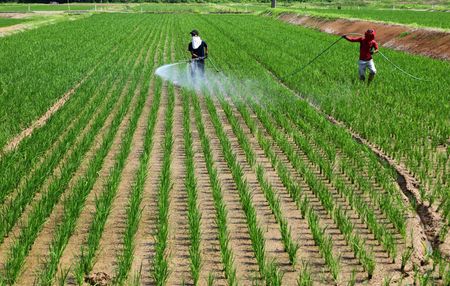
FILE PHOTO: Farmers spray herbicide at Kazuhachi Hosaka's rice farm in Joetsu, Niigata prefecture, Japan, June 19, 2025. REUTERS/Kim Kyung-Hoon/File Photo
Japan's food self-sufficiency ratio fell to 37% for the fiscal year ended March 31, down 1 percentage point from a year earlier and well below the government's 45% target for fiscal 2030, the agriculture ministry said on Friday.
The ratio, among the lowest of developed economies, underscores Japan's vulnerability to food supply disruptions amid heightened geopolitical tensions, including the prolonged Russia-Ukraine war and the Middle East conflict.
The calorie-based ratio, which measures the share of food consumed that is produced domestically, slipped as rice consumption declined and private-sector stockpiles increased, the Ministry of Agriculture, Forestry and Fisheries said.
The ratio has remained below 40% for more than a decade despite government efforts to boost domestic production of heavily imported crops such as wheat and soybeans.
Australia, Canada, France and the U.S. have self-sufficiency ratios above 100%, whereas Germany's ratio stood at 81%, Britain's at 56% and Italy's at 51% in 2023, according to ministry estimates based on the latest available data.
Japan's self-sufficiency rate measured by production value rose 2 percentage points to 66% in the last fiscal year, helped by higher domestic prices for rice and livestock products.
The farm sector continues to face structural challenges, including an ageing workforce, a lack of successors and shrinking farmland. Dietary shifts away from rice toward meat and foods cooked with oil have also weighed on the self-sufficiency ratio.
To achieve its 45% goal, Japan plans to expand farmland for wheat and soybeans, for which it remains heavily dependent on imports, said Toshiaki Sasaki, planning director at the ministry's food security office.
The ministry will review progress toward the fiscal 2030 target later this month and consider additional measures as needed, Sasaki said.
(Reporting by Yuka Obayashi; Editing by Jamie Freed)
© 2026 by Asian Media Group Inc.
Recent Articles
- Why Are Patriot Missile Stockpiles Depleted Worldwide?
- Trump’s $400 Million White House Ballroom Blocked by Appeals Court
- US Labor Participation Plunges to Lowest Level in 5 1/2 Years
- No Good Exit from Trump's Iran Adventure
- Japan Food Self-Sufficiency Ratio Falls Well Below 2030 Goal of 45%
- China's Moonshot Kimi Model Joins AI Jailbreakers
- Retailers Tap AI Shopping Traffic but Fight to Keep Customer Data
- Trump Loses 21 Straight Court Battles for State Voter Rolls as Midterms Near
- What Is Wildberries and Why Are Ukrainian Drones Targeting It?
- Cloudflare Signs Up Developers Amid Higher AI-driven Spending
Other Asian Media Group Sites
- AsiaMs.net — Asian American Women's Resource
- AsianSports.net — Asian American Sports and Fitness
- VoxCali.com — Videos and Podcasts for Asian Americans
- MyGoldScene.com — Guide to Asian Entertainment
- AttheBanquet.com — Asian Fine Dining and Hospitality
- EastwardDrive.com — Asian Carbuying Intelligence
- EastTable.com — Modern Asian Food and Culture
- TadkaTable.com — Inside South Asian Cooking
- GoGenerational.com — Diaspora Families Building Wealth