

Let's Not Do the Whole "China Virus" Thing Again
By J. J. Ghosh | 10 May, 2026
Hantavrius has plenty of awful symptoms. Let's make sure anti-Asian racism isn't one...again.
I want to be upfront about something: I am not particularly worried about Hantavirus.
The World Health Organization has been emphatic that the current outbreak poses a low risk to the general public and is not the next COVID.
My heart of course goes out to the three who recently died from the illness.
But fortunately, at the time of writing this, just eight cases in the initial cluster have been confirmed or suspected. The virus involved is a rare strain called Andes virus, which is found in South America and contracted primarily through exposure to infected rodents.
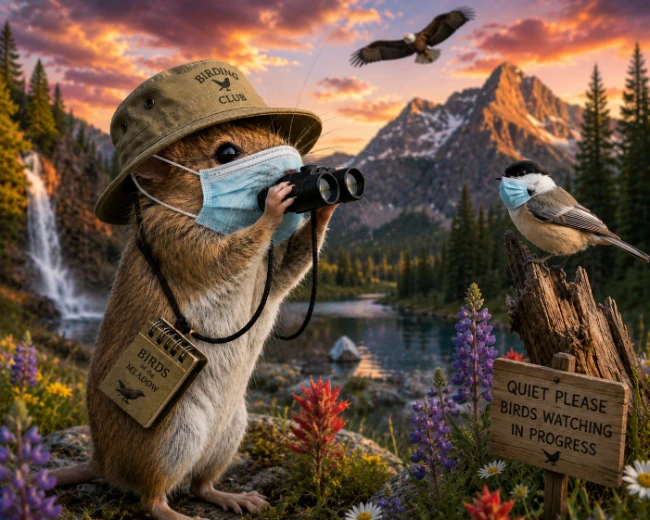
The outbreak appears to have originated with a Dutch couple on a birdwatching trip near a landfill in Argentina — which, if nothing else, is a reminder that the real danger in this world is birdwatchers.
What I’m worried about is something slightly different: the name Hantavirus.
While little was known about it at the time, a major Hantavirus outbreak occurred during the Korean War
Let’s be honest, it sounds like something that happened in Asia. It sounds, to the untrained American ear that spent the last five years associating anything that sounds vaguely Asian with a global catastrophe, extremely problematic.
And as it turns out, it does actually have Asian roots.
The Korean War
The word “hantavirus” is derived from the Hantan River, a waterway flowing through the Korean peninsula.
During the Korean War, around 3,200 cases of epidemic disease occurred between 1951 and 1954 among United Nations soldiers stationed near the Hantan River. At the time the disease was given the very straightforward name of “Korean hemorrhagic fever.”
But while American troops were getting sick in significant numbers near the outbreak site, nobody could figure out what was causing it.
Anti-Asian hate hate spiked dramatically as a result of the COVID-19 pandemic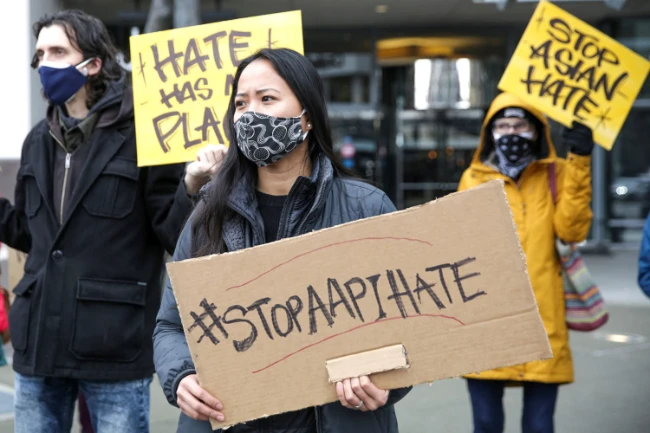
The answer didn’t come for decades. In 1976 Korean scientist Ho Wang Lee showed that antigens from the lungs of striped field mice were reactive to antibodies in the blood of war survivors.
In 1978 the virus was isolated for the first time and named Hantaan virus after the river. The broader family of related viruses subsequently took the name hantaviruses, and that name has stuck ever since.
So yes: the virus is named after a Korean river, was first identified during the Korean War, was isolated by a Korean scientist, and is still known in some contexts as Korean hemorrhagic fever. If you were designing a disease name specifically to give anxious American reactionaries something to work with, you could not do much better than this.
There's also, just for fun, a strain of hantavirus called Seoul virus, named after the South Korean capital. There’s another called Hantaan. It might as well be called “Asian pneumonia” at this point.
Déjà Vu
The current outbreak, to be clear, has nothing to do with Korea or Asia.
It is the Andes virus, a South American strain, carried by rodents in Argentina. The index case was a 70-year-old man from the Netherlands. The outbreak is about as Asian as a stroopwafel.
None of that will matter to a certain percentage of the internet. We know this because we’ve seen this movie before.
During the COVID-19 pandemic, anti-Asian hate crimes surged dramatically across the United States as the virus — which originated in Wuhan, China — became associated in the public imagination with Asian people broadly. “China virus,” “Kung flu,” “Wuhan Flu” and a range of slurs became common currency in online spaces and, eventually, political speeches.
The Stop AAPI Hate coalition documented thousands of incidents of harassment, assault, and discrimination in the first years of the pandemic.
People were spat on, shoved onto subway tracks, and told to go back to where they came from. Many of them had never been to China. Some of their families had been in America for generations.
The lesson of COVID is that it does not take much. A name, a phrase, a presidential tweet — and suddenly every Asian face becomes a vector.
What We Can Learn from Swine Flu
There’s a useful comparison case here, and it involves the pork industry.
In 2009 when H1N1 flu emerged, the media branded it “swine flu” and the negative effects on the pork industry were immediate. China and Russia banned pork imports from certain American states. Smithfield Foods and Tyson saw their stock prices drop. Hog futures took a rare dive.
So the National Pork Producers Council launched an aggressive lobbying campaign to change the name. “This flu is being called something that it isn’t, and it’s hurting our entire industry,” said communications director Dave Warner. “It is not a ‘swine’ flu, and people need to stop calling it that.”
The lobbying worked: government health agencies began officially calling it “2009 H1N1,” and the CDC and USDA both publicly discouraged use of the swine flu label.
The pigs, in other words, had an industry lobby, a PR crisis team, and the full attention of the United States Department of Agriculture working to protect their reputation.
Asian Americans had the Stop AAPI Hate coalition and a lot of very good intentions.
The difference in outcomes was instructive.
The Goal
I’m not asking anyone to rename Hantavirus. The name predates my concerns by several decades and is now entrenched in scientific nomenclature. Ho Wang Lee named it after a Korean river, and Dr. Lee’s scientific legacy should not be sacrificed to protect people from their own ignorance.
What I’m asking is that the media, public health officials, and anyone with a platform be thoughtful about how they discuss this outbreak — particularly the parts that do and do not have anything to do with Asia.
This is not complicated information. It is, however, the kind of information that tends to get lost when people are scared, when headlines need to be short, and when the word “Hanta” sounds just foreign enough to activate certain instincts that five years of pandemic-era scapegoating did not exactly suppress.
But if you are going to scapegoat someone, I kinda ask that you make it the birdwatchers.
© 2026 by Asian Media Group Inc.
Recent Articles
- Unitree Prices IPO at $9 Billion Valuation
- AMD Buys Taalas to Expand Bet on AI Inference Chips
- N. Korean Forces Joining Russia's War Against Ukraine in Large Numbers
- S. Korea Province Deploys Drones to Warn Elderly Farmers Amid Heatwave
- Nintendo Operating Profit Jumps 151% on Robust Software Demand, Tariff Refund
- New Left-Wing Media Power Surge of Progressive Candidates
- MAGA Republicans, Democrats Jointly Blame Trump's Tech Ties for AI Inaction
- OpenAI, Anthropic AI Agents Implicated in New Security Breaches
- Iran Threatens to Hit Gulf States If US Launches New Strikes
- Ralph Lauren's Beat Powered by Young Shoppers in Asia, North America
Other Asian Media Group Sites
- AsiaMs.net — Asian American Women's Resource
- AsianSports.net — Asian American Sports and Fitness
- VoxCali.com — Videos and Podcasts for Asian Americans
- MyGoldScene.com — Guide to Asian Entertainment
- AttheBanquet.com — Asian Fine Dining and Hospitality
- EastwardDrive.com — Asian Carbuying Intelligence
- EastTable.com — Modern Asian Food and Culture
- TadkaTable.com — Inside South Asian Cooking
- GoGenerational.com — Diaspora Families Building Wealth