

Why a Hmong Truck Driver Shot 8 People in the Wisconsin Woods
By MK Choi | 07 Aug, 2026
An Army vet named Chai Soua Vang was hunting when he encountered threats and racial slurs from a group of white hunters.
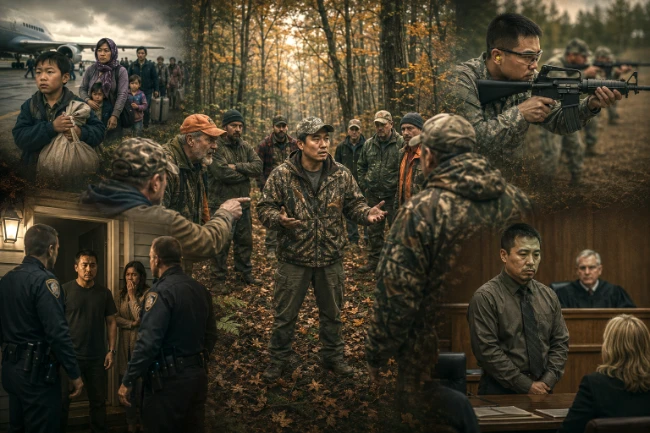
Long before Chai Soua Vang became the central figure in one of the deadliest confrontations in American hunting history, he was a child of a secret war.
Vang was born in 1968 in Sayaboury Province, Laos, into a Hmong family whose fate had become entangled with the United States. His father reportedly fought alongside the CIA-backed Hmong forces that opposed communist troops during the Vietnam War era.
A Childhood Shaped By War And Flight
When the communist Pathet Lao took power in 1975, families associated with the American war effort faced persecution. Vang spent much of his early childhood in a refugee camp in Thailand, part of a displaced population that had lost its homeland and couldn’t safely return.
His family reached the US in 1980, when Vang was about 11, and settled in St. Paul, Minnesota. He delivered newspapers as a teenager before moving to Stockton, California, in 1985.
The outline of his early life suggests a boy pushed quickly toward self-reliance. He had crossed borders, learned a new language and watched his parents try to rebuild a family in a country whose troops had once depended on Hmong fighters but whose citizens knew little about them.
That experience alone doesn’t explain what Vang would do in the Wisconsin woods. Thousands of Hmong refugees endured the same dislocation without becoming violent. There’s also no public basis for diagnosing Vang retrospectively with a trauma-related disorder.
But his background matters because it formed a man who appears to have placed unusual importance on independence, preparedness and personal respect. When he later believed a group of armed strangers had surrounded and humiliated him, those qualities may have turned into hypervigilance, wounded pride and rage.
The Disciplined Young Guardsman
Vang seemed determined to belong in his adopted country.
In high school, he joined the California Cadet Corps, became a US citizen and helped establish a Hmong student organization. After graduating in 1987, he reportedly worked in social services assisting other Hmong refugees.
At 21, he enlisted in the California Army National Guard. He served from 1989 to 1995 in the 236th Medical Brigade, earned a Good Conduct Medal and qualified for a sharpshooter badge.
That badge didn’t make Vang a military sniper. It was an intermediate marksmanship qualification, above marksman but below expert. Still, it established that he was comfortable with rifles and trained to fire accurately under controlled conditions.
Vang didn’t serve in combat. Nothing indicates that the Guard taught him to murder civilians or caused the later shootings. Millions of veterans own firearms and hunt without harming anyone.
His service is relevant for a narrower reason. When the confrontation in Wisconsin exploded, Vang possessed the practiced ability to operate his semiautomatic rifle quickly and effectively. The victims weren’t facing an inexperienced gun owner firing wildly. They were facing a trained marksman carrying a powerful rifle with a detachable magazine.
After leaving the Guard, Vang worked as a truck driver and eventually operated a long-haul trucking business. He earned an associate degree in business administration, became a father and served as a shaman within his family.
To acquaintances, he could appear serious, capable and self-contained. Another hunter who encountered him immediately after the shootings would describe him as polite, though noticeably nervous.
That controlled exterior, however, concealed a volatile side.
The Anger Beneath The Self-Control
Public records revealed earlier domestic disturbances involving Vang. Police responded to a 2001 incident in which a loaded handgun was found in a bedroom and Vang was accused of threatening his wife. He was arrested, but no charges were filed after his wife declined to cooperate.
A later marriage reportedly ended following another violent domestic confrontation.
These episodes don’t prove that Vang entered the Wisconsin woods planning to hurt anyone. They do suggest that, under emotional pressure, he had previously mixed anger, intimidation and weapons.
At sentencing, Judge Norman Yackel described him as possessing an explosive temper. That characterization fits the pattern that emerged during the hunting confrontation: Vang could appear restrained until he decided that he had been disrespected or threatened. Once that threshold was crossed, his response could become wildly disproportionate.
He also appeared to possess a rigid sense of justification. Even after the killings, Vang continued to frame his actions as self-defense and as a response to the victims’ conduct. That made it difficult for him to distinguish between explaining why he felt endangered and accepting responsibility for what he chose to do.
Such rigidity may be the most important personality trait in understanding the shootings. A person capable of reconsidering his assumptions can interrupt an escalating conflict. Vang appears instead to have locked onto a single interpretation: these men were racist, they meant to harm him and he had to defeat them before they defeated him.
Once that belief took hold, every movement around him could be interpreted as proof.
A Hunter In Unfamiliar Woods
By 2004, Vang had hunted deer for more than a decade. He wasn’t a newcomer who had never encountered property boundaries or hunting regulations.
Nevertheless, on November 21, the second day of Wisconsin’s gun-deer season, he became separated from the friends with whom he was hunting in Sawyer County. Vang said he had followed a deer, become lost and encountered a tree stand that appeared unused.
He climbed into it.
The stand was on privately owned land near Meteor, Wisconsin. One of the owners, Terry Willers, discovered Vang and told him he was trespassing. By both accounts, the initial exchange was relatively controlled. Vang climbed down, apologized and began to leave.
The incident could have ended there.
Instead, Willers radioed other members of his hunting party. Several arrived on all-terrain vehicles. The group wanted Vang’s hunting-license number so they could report him to conservation authorities.
The arrival of the ATVs changed the emotional geometry of the encounter. Vang was now one man, carrying a rifle, facing a growing group of white hunters in an isolated part of the woods. The hunters saw a trespasser who might escape punishment. Vang said he saw armed men closing in around him.
What happened next became the central dispute at his trial.
Threats, Insults And Conflicting Accounts
Vang testified that members of the group cursed him, threatened to beat him and used racial slurs against Hmong people. He said he attempted to walk away but kept looking back because he was afraid.
At least part of the hostile exchange was supported by survivor Lauren Hesebeck, who recalled property owner Robert Crotteau threatening to kick Vang’s ass if he kept arguing. Hesebeck also testified about offensive language during the confrontation, though the witnesses disagreed about precisely what was said and whether it carried an explicitly racial meaning.
The surviving hunters denied that anyone had threatened to shoot Vang. They said they wanted his license number and intended to report him.
Vang claimed that Willers raised his rifle and fired first. Believing he was about to be killed, Vang said, he opened fire.
Willers and Hesebeck told the opposite story. They testified that Vang fired first and that Hesebeck discharged the hunters’ only responsive shot after Vang had already wounded him and shot several others.
No physical evidence established that Willers had fired the opening shot. The jury ultimately rejected Vang’s account.
It’s possible that Vang genuinely believed he was in mortal danger. Fear doesn’t need to be objectively reasonable to feel overwhelming to the person experiencing it. An angry group, racist language, isolation and the visible presence of firearms could have activated every defensive instinct he possessed.
But even genuine fear can’t explain everything that followed.
When Panic Became Pursuit
The first shot may have erupted from a split-second perception of danger. The subsequent shots formed a different pattern.
Vang fired repeatedly as members of the group scattered. Several victims were shot in the back. Joey Crotteau, 20, was found hundreds of feet from the original confrontation after apparently trying to escape. Other hunters who arrived after the shooting began were also attacked.
Vang reloaded and continued firing. Six people ultimately died: Robert Crotteau, his son Joey Crotteau, Allan Laski, Mark Roidt, Jessica Willers and Denny Drew. Terry Willers and Lauren Hesebeck survived with gunshot wounds.
The distances, trajectories and wounds devastated Vang’s self-defense claim. A person may use deadly force when he reasonably believes it’s necessary to prevent imminent death or grave bodily harm. That justification becomes much harder to sustain when the supposed attackers are fleeing, lying wounded or arriving without understanding what has happened.
Vang’s actions suggest that his mental objective changed. He was no longer merely escaping a threat. He was eliminating people he perceived as enemies and possible witnesses.
That’s the point at which fear merged with anger.
Vang later said some of the men had brought death upon themselves by insulting and threatening him. To prosecutors, the statement revealed that disrespect, not simply physical danger, had become part of his justification.
He had converted an ugly trespassing dispute into a moral contest in which he decided who deserved to live.
The Military Skills That Magnified The Violence
Vang’s Guard training didn’t cause the confrontation, but it made his loss of control more lethal.
He was armed with a semiautomatic Saiga rifle chambered for the same powerful cartridge used in the AK-47 family of weapons. He knew how to aim, reload and continue engaging targets.
In another person’s hands, panic might have produced a missed shot or a brief exchange followed by flight. Vang’s combination of marksmanship, physical determination and emotional certainty allowed him to pursue people through thick woods and strike them repeatedly.
His long-haul trucking career may also have reinforced a personality accustomed to operating alone, solving problems independently and maintaining control without much assistance. That kind of self-sufficiency can be admirable.
In a crisis, however, it may discourage retreat, surrender or reliance on authorities. Vang had been told he would be reported. Rather than accept the inconvenience and possible punishment of a trespassing citation, he appears to have experienced the encounter as an intolerable challenge to his dignity and safety.
He had many alternatives. He could have continued walking. He could have unloaded his rifle. He could have waited for a game warden. He could have accepted a citation and contested it later.
His character flaw was an inability to tolerate feeling powerless in front of men he believed despised him.
A Trial About More Than Race But Not Less
Vang’s 2005 trial became a tense examination of race, hunting culture and self-defense.
Many Hmong hunters said they had endured insults, harassment and suspicion in rural parts of Wisconsin and Minnesota. Some white hunters complained that Hmong newcomers ignored property boundaries or hunting customs. The accusations hardened into stereotypes on both sides.
The massacre intensified that hostility. Anti-Hmong slogans and bumper stickers appeared after the killings, forcing community leaders to warn against blaming an entire ethnic group for one man’s actions.
The racial context can’t simply be dismissed. Vang may indeed have encountered a threat and degrading language. Racism can turn a routine disagreement into a frightening confrontation, particularly when one person is isolated and outnumbered.
But acknowledging racism doesn’t require accepting Vang’s response as justified.
Even the prosecutor argued that any insults were grossly disproportionate to what Vang did. The jury agreed, finding him guilty of six counts of first-degree intentional homicide and three counts of attempted homicide.
He received six consecutive life sentences plus 70 years, with no possibility of release.
Why He Pulled The Trigger
There was no single cause of the Wisconsin woods massacre.
It wasn’t simply racism, because countless people endure racist abuse without committing murder. It wasn’t military service, because military discipline ordinarily teaches control rather than vengeance. It wasn’t Hmong culture, refugee history, hunting or gun ownership.
The tragedy emerged from a convergence.
Vang carried a history of displacement and a strong need for self-reliance. He had documented difficulty controlling anger in intimate conflicts. He was intensely sensitive to disrespect, highly proficient with a rifle and inclined to justify his own conduct rigidly once he believed he had been wronged.
Then he became lost, isolated and surrounded by angry strangers. Threats and possibly racial insults raised the emotional temperature. The visible rifle in Willers’ possession gave Vang’s fear a concrete focus.
His first decision may have been made in terror.
His next decisions were made in anger.
He continued shooting when escape was possible. He pursued people who were running away. He attacked hunters who weren’t presenting an immediate threat. Those choices are why the encounter can’t be reduced to a story of a frightened minority hunter defending himself against a racist mob.
Vang died in custody in June 2026 at age 57, more than two decades after the killings. He never succeeded in persuading a court that his actions were justified.
© 2026 by Asian Media Group Inc.
Recent Articles
- Hormuz Straight Talk Remains Elusive
- Is Rajeeb Hazra's Quantinuum the Quantum Computing Startup to Beat?
- Rajeeb Hazra Partners Quantinuum with Oracle to Bring Quantum Computing to Cloud
- Trump Media Quarterly Loss Jumped 11-Fold to $238 Million
- Cheap Meals No Longer Do the Trick for McD, Rivals
- Joby Acquires Defense Tech Company for $500 Million
- Disney Wins Global Streaming Rights for Formula E Races
- Bumble Eases Women-First Messaging Rule as Dating Apps Seek Engagement Boost
- Nvidia Is Developing Nemotron 4 Open-Source Models
- US Human Rights Groups Sue Trump over Anti-ICC Push
Other Asian Media Group Sites
- AsiaMs.net — Asian American Women's Resource
- AsianSports.net — Asian American Sports and Fitness
- VoxCali.com — Videos and Podcasts for Asian Americans
- MyGoldScene.com — Guide to Asian Entertainment
- AttheBanquet.com — Asian Fine Dining and Hospitality
- EastwardDrive.com — Asian Carbuying Intelligence
- EastTable.com — Modern Asian Food and Culture
- TadkaTable.com — Inside South Asian Cooking
- GoGenerational.com — Diaspora Families Building Wealth
- TransPacBound.com — Transpacific Traveler